

Choosing the right sponsorship program is never a simple decision. With so many organizations operating in the Philippines, donors often struggle to understand what sets one apart from another—and more importantly, where their money will actually make a difference. Programs like SOS Children’s Villages sponsorship in the Philippines are widely recognized, but they represent just one model among many. The Vision Help International Care Foundation has spent over 15 years working on the ground in some of the Philippines’ most vulnerable communities, offering a focused, transparent, and deeply personal alternative for donors who want their support to be felt directly by the children it’s meant to reach.
SOS Children’s Villages Sponsorship in the Philippines: What the Model Looks Like
SOS Children’s Villages is one of the most recognized child welfare organizations in the world, with a presence in over 130 countries. Its model is built around family-style homes, where groups of children live together with a dedicated SOS mother in a structured residential setting. Donors who choose to support SOS Children’s Villages sponsorship in the Philippines contribute to the overall running costs of these villages rather than directly funding a single child. The connection between a sponsor’s contribution and a specific child’s daily life is real but indirect.
This approach works well for donors who trust the organization’s structure and are comfortable with pooled funding. The SOS model is well-documented and professionally managed, with decades of experience across diverse cultural and economic contexts. That said, it operates at a scale that inevitably creates some distance between the donor and the child—and for many people, that distance matters.
Is SOS Children’s Villages the Only Reputable Option in the Philippines?
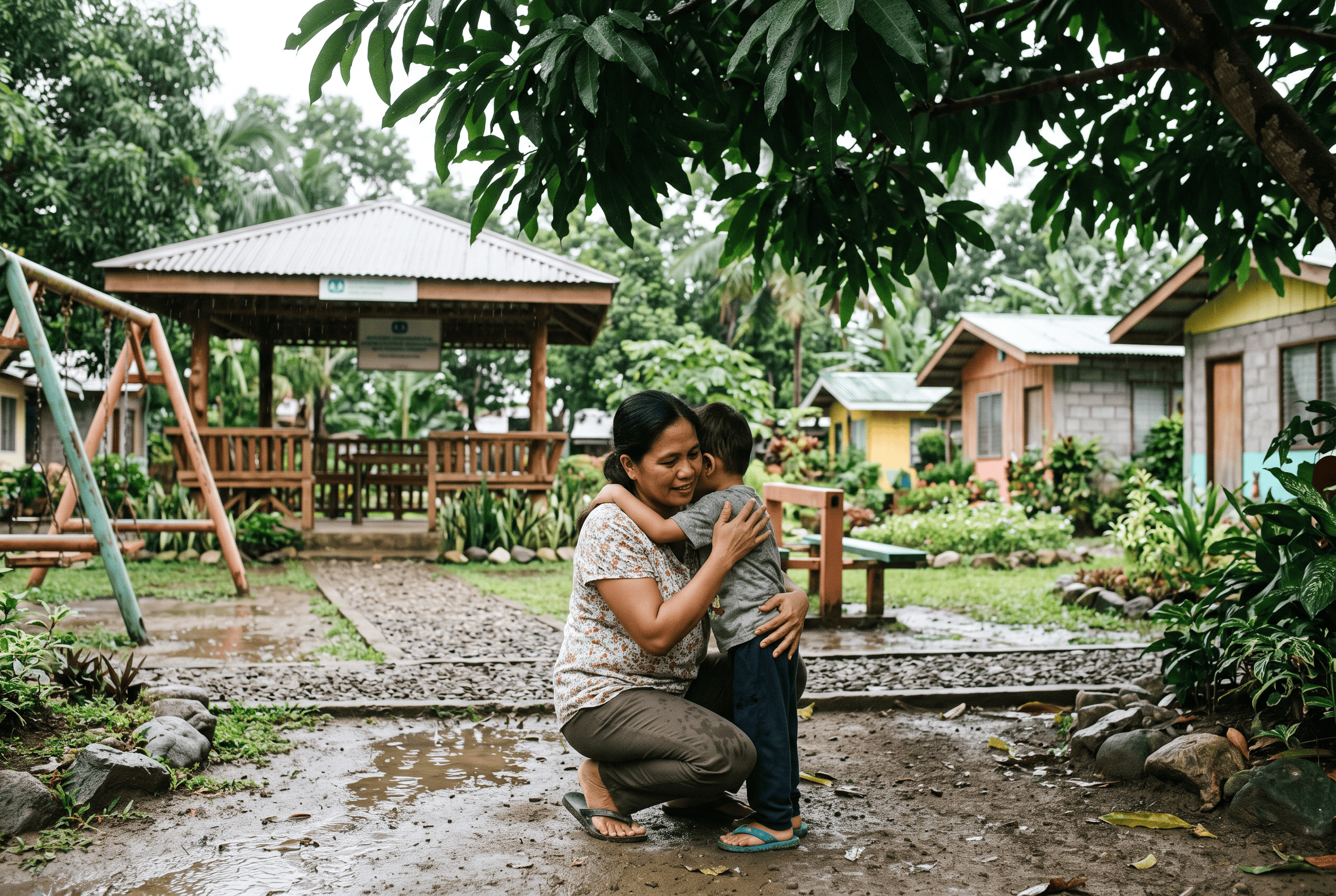
Absolutely not. The Philippines has a growing network of locally registered nonprofits that work with vulnerable children in ways that are just as rigorous—and often more personally connected. The Vision Help International Care Foundation, for example, operates a residential child care center, Village of Hope in Morong, accredited by the Philippine Department of Social Welfare and Development (DSWD). These centers provide care for abandoned, orphaned, neglected, abused, surrendered, foundling and temporary shelter and trafficked children with staff who are present every single day, building genuine relationships with the children in their care.
Alternative to SOS Children’s Villages: What Local Organizations Offer
For donors considering an alternative to SOS Children’s Villages, the key question is not which organization has the bigger name—it’s which one offers the most direct and accountable path from your contribution to a child’s life. Locally embedded nonprofits often operate with leaner structures, which typically means lower charity overhead costs and a higher share of each donation reaching frontline programs. That difference in structure can translate into a meaningful difference in impact, particularly in communities where every peso counts.
Donation Transparency and Direct Communication
Donation transparency is one of the most important factors in choosing a sponsorship program. Reputable local organizations publish clear breakdowns of how funds are used, maintain government accreditation, and are reachable when donors have questions. Smaller organizations also tend to offer more direct communication between sponsors and the children they support—specific news about school progress, health milestones, and personal achievements. That kind of direct relationship is harder to maintain at the scale SOS Children’s Villages operates, and it’s something many donors genuinely value. Knowing that your monthly contribution connects to a real child in a real community makes the act of giving feel grounded rather than abstract.
How Charity Overhead Costs Shape Real-World Impact
Every dollar that goes toward administration is one that doesn’t reach a child directly. Large international nonprofits carry structural costs—regional offices, international coordination, global marketing campaigns—that smaller, locally focused organizations simply don’t. When comparing charity overhead costs across programs, look for published financial reports and pay attention to what percentage of contributions fund direct program delivery. That single figure can tell you a great deal about an organization’s priorities.
Sponsorship Organizations in the Philippines: Local Models That Deliver
Several locally run sponsorship organizations in the Philippines operate residential centers that follow similar principles to SOS—stable homes, consistent caregivers, access to education and healthcare—without the overhead of a global brand. What distinguishes the best local programs is their integration into the surrounding community. Children attend local schools, participate in community events, and maintain connections with their broader environment—all of which supports healthier long-term development and makes the eventual transition to independent adult life far more realistic.
Organizations that operate at this community level often produce outcomes that are harder to achieve through larger, more institutionalized models. The relationships formed between staff, children, and sponsors tend to be more durable, more personal, and more meaningful to everyone involved.
What to Look for in a Sponsorship Project in the Philippines
When evaluating a sponsorship project in the Philippines, consider the following:
- Is the organization accredited by the Philippine DSWD or another recognized government body?
- Does it publish financial reports that break down how funds are used?
- Can you communicate directly with the child you’re sponsoring or receive specific updates about their progress?
- How long has the organization been operating, and what is its track record in the communities it serves?
Donate for Orphans in the Philippines: Making Your Support Count
The decision to donate to orphans in the Philippines is one of the most impactful choices a donor can make. Orphaned and abandoned children face compounding disadvantages—without stable care, their chances of accessing education, healthcare, and a safe environment drop significantly. Residential sponsorship programs address that gap directly and consistently. Key benefits of supporting these programs include:
- Stable, safe housing that removes children from dangerous or neglectful environments
- Access to consistent education, from basic literacy through to higher schooling
- Healthcare and nutrition programs that address both immediate and long-term physical needs
- Emotional support and mentorship from dedicated caregivers who remain present over time
- Long-term planning for each child’s development and future independence
Finding the Right Fit as a Donor
SOS Children’s Villages sponsorship in the Philippines is a well-established, credible program with a long history of supporting vulnerable children. For donors who value institutional scale and international recognition, it remains a solid choice. But it is far from the only one—and for many donors, it may not be the most personally fulfilling option available.
For those who want a more direct relationship with the children they support, locally focused organizations offer something genuinely different. The Vision Help International Care Foundation has built that kind of program over more than 15 years, working in communities where every sponsorship is felt personally by the child it supports—and where children in need are never just a number in a report.