

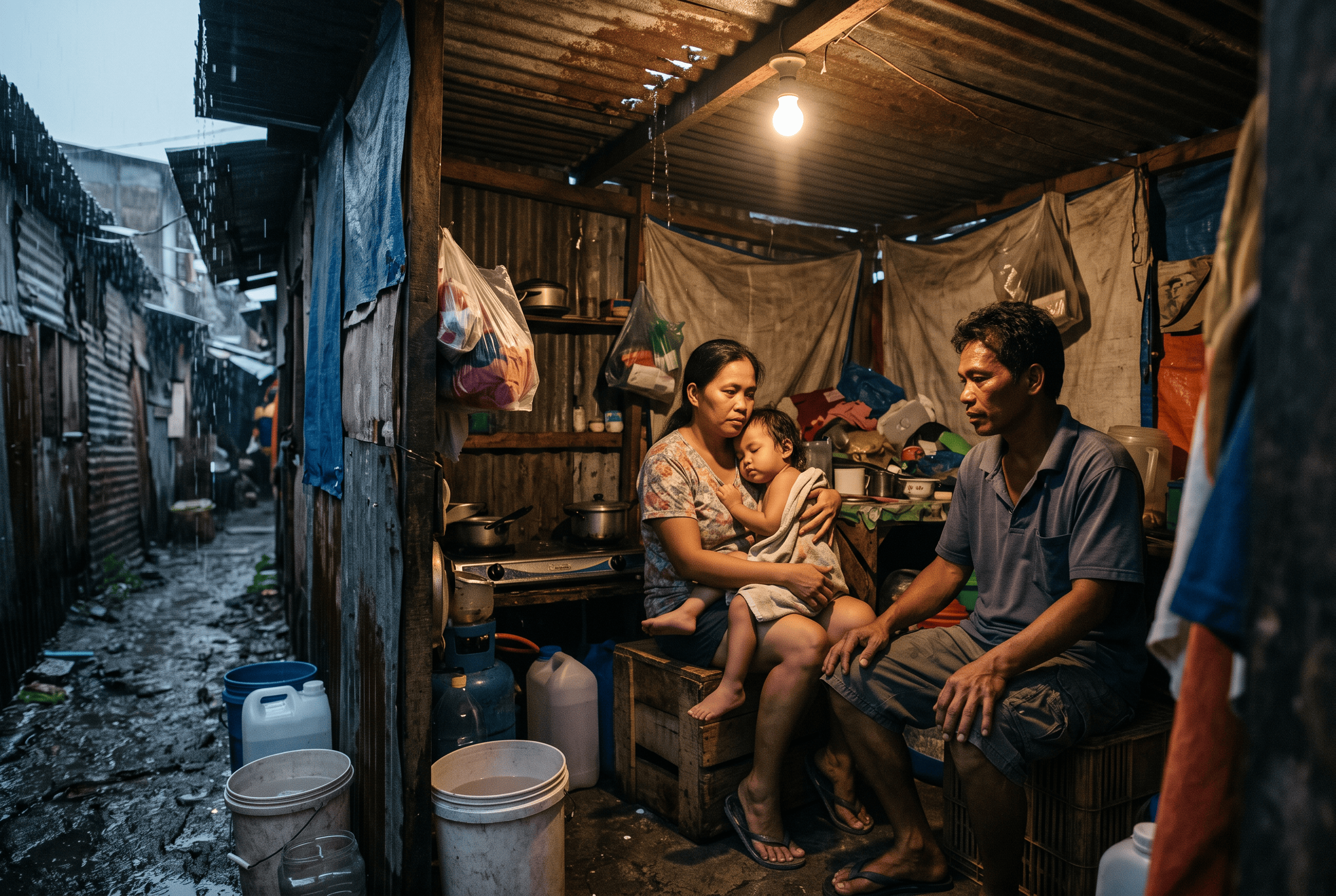
For millions of people in Manila, poverty is not a temporary setback but a permanent condition that shapes every aspect of daily life. Life in the slums of Manila means overcrowded housing, unreliable access to clean water, limited healthcare, and schools that many children never finish. The structural factors that keep families trapped in these conditions are deeply rooted and not easily reversed. The Vision Help International Care Foundation has spent over 15 years working directly inside these communities, running programs that address the immediate needs of families while building the foundations for genuine long-term change.
Life in the Slums of Manila: What It Actually Looks Like
Manila is a city of extraordinary contrasts. Gleaming shopping malls and high-rise condominiums sit near communities where families of six or seven share a single room, where open drainage channels run alongside narrow footpaths, and where children grow up without ever seeing a doctor. The slum communities of Tondo, Baseco, and Smokey Mountain are among the most densely populated urban areas in the world, and the conditions there are difficult to fully convey in words.
Housing in these communities is typically informal and precarious. Structures are built from salvaged materials on land the residents don’t own, which means entire communities can be demolished at short notice. Flooding is a recurring problem, particularly during typhoon season, when homes that took years to build can be destroyed in hours. Families rebuild, often in the same location, because they have nowhere else to go.
Poverty in the Philippines in these urban settings is compounded by a lack of basic infrastructure. Clean water must often be purchased from private vendors at prices that consume a significant portion of a family’s daily income. Electricity is frequently obtained through informal connections that are both unreliable and dangerous. Sanitation systems are minimal or nonexistent in the most densely settled areas.
How Does Aid Actually Reach Families in Manila’s Slums?
Reaching families in Manila’s most congested communities requires organizations to be physically present rather than operating from a distance. The Vision Help International Care Foundation maintains a permanent program center in Balut, Tondo, from which it runs weekly outreach programs, daily feeding and hygiene sessions for children, literacy classes for adults and teenagers, and educational sponsorships for students at every level. Being embedded in the community means staff are trusted, families know where to turn, and programs can respond quickly when situations change.
Causes of Child Poverty in the Philippines: Why Families Stay Trapped
Understanding why poverty persists in communities like Tondo requires looking at the structural conditions that make it so difficult to escape. The causes of child poverty in the Philippines are multiple and interconnected, and addressing any one of them in isolation rarely produces lasting change.
The Role of Education and Employment
Education is theoretically accessible in the Philippines, but the real costs—uniforms, supplies, transportation, and the income lost when a child attends school instead of working—make it genuinely unaffordable for many families. When parents cannot read or write themselves, the value of schooling is also harder to communicate to children who are needed at home or on the streets.
Effects of poverty on children in these environments accumulate quickly. A child who misses the early years of schooling falls behind and rarely catches up. A teenager who leaves school to work enters an informal labor market with limited options and little protection. The window for meaningful educational intervention is narrow, and once it closes, the cycle tends to continue into the next generation.
Employment in Manila’s informal economy is precarious by nature. Day laborers, street vendors, waste scavengers, and domestic workers earn incomes that fluctuate with demand and offer no security during illness, injury, or economic downturns. How many children live in poverty in the Philippines is a question with a sobering answer—estimates consistently place the figure in the millions, with urban slum communities accounting for a significant share of that total.
Infrastructure, Health, and the Poverty Trap
Poor infrastructure feeds directly into poor health outcomes, which in turn feed back into poverty. Children who drink contaminated water get sick more often. Sick children miss school. Families who spend money on medical treatment have less for food, rent, and education. Medical aid for children in the Philippines delivered by community-based organizations helps break this cycle by providing basic healthcare to families who cannot afford private clinics and live too far from functional public hospitals to use them reliably.
Local Aid in the Philippines: What Works and Why
Decades of development work in Manila’s slum communities have demonstrated that the most effective interventions are those delivered by organizations with deep local roots. Local aid in the Philippines provided by organizations that are embedded in the communities they serve tends to be more responsive, more trusted, and more sustainable than programs parachuted in from outside.
Key characteristics of effective local aid programs include:
- Permanent physical presence in the community rather than periodic visits
- Programs designed with input from the families they serve
- Staff who are known and trusted by community members over many years
- Integration of multiple services so that families don’t need to navigate several different organizations to access support
- Clear accountability structures that ensure resources reach the intended beneficiaries
Donate to the Philippines: How Financial Support Makes Programs Possible
None of this work is possible without consistent financial support. When donors choose to donate to the Philippines through organizations with proven track records and transparent operations, they are funding the daily reality of programs that serve some of the world’s most vulnerable children and families.
Donations for children directed toward community-based programs in Manila’s slums fund feeding cycles, literacy classes, medical outreaches, educational sponsorships, and the staff salaries that make sustained program delivery possible. Consider what regular financial support enables on the ground:
- Daily meals and hygiene support for malnourished children aged five to twelve
- Literacy classes that teach adults and teenagers to read, write, and comprehend
- Educational sponsorships that cover school fees, supplies, and transportation
- Medical monitoring and basic healthcare for children in nutrition recovery programs
- Residential care for children removed from dangerous or neglectful situations
Aid That Goes the Distance
Life in the slums of Manila does not have to be a permanent condition for every family living it today. Change is possible, but it requires sustained effort, genuine community engagement, and the kind of long-term commitment that only consistently funded, locally embedded organizations can deliver.
The Vision Help International Care Foundation has been that kind of organization for over 15 years. By staying present in communities that many organizations find too difficult or too unglamorous to work in, VHICF demonstrates that help for children in the Philippines is most powerful when it is patient, personal, and built to last.