

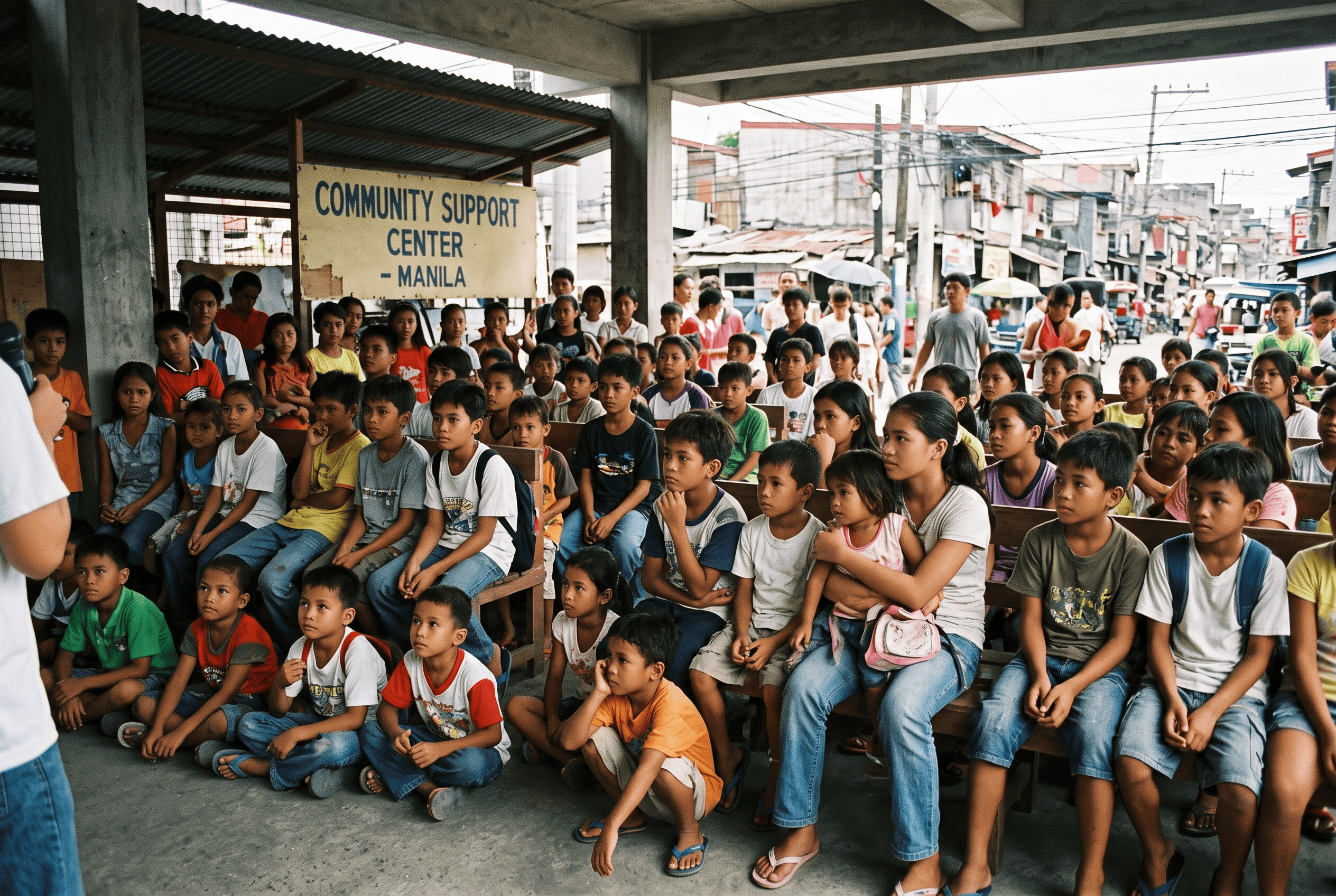
Child trafficking is one of the most serious human rights violations occurring in the Philippines today. Thousands of children are exploited every year through forced labor, sexual abuse, and illegal adoption networks, often with little visible support from the systems meant to protect them. Understanding what child trafficking is and recognizing how it operates is the first step toward fighting it effectively. The Vision Help International Care Foundation has been working for over 15 years in some of Manila’s most vulnerable communities, providing shelter, care, and long-term support to children who have experienced trafficking and abuse firsthand.
What Is Child Trafficking, and Why Is the Philippines Particularly Vulnerable?
Child trafficking refers to the recruitment, transportation, transfer, or receipt of children through force, deception, or coercion for the purpose of exploitation. That exploitation can take many forms: forced labor, sexual exploitation, domestic servitude, or illegal adoption. In the Philippines, a combination of deep-rooted poverty, geographic fragmentation across more than 7,000 islands, and limited law enforcement capacity in rural areas creates conditions where trafficking networks can operate with relative ease.
Child poverty in the Philippines is a significant driver. Families living in extreme poverty are sometimes manipulated by traffickers posing as legitimate employers or recruiters, promising education or work opportunities for their children. In some cases, parents are deceived into believing their child is being given a better life. The reality is almost always far darker.
The Philippines is recognized internationally as both a source and destination country for trafficked children, with cases documented across urban slums, coastal fishing communities, and remote indigenous territories.
How Are Children Protected from Trafficking in the Philippines?
The Philippine government has enacted the Anti-Trafficking in Persons Act, which criminalizes all forms of trafficking and provides a legal framework for prosecution and victim support. However, legislation alone is not enough. Organizations like the Vision Help International Care Foundation play a critical role by working directly in high-risk communities, identifying vulnerable children before they are exploited, and providing residential care and rehabilitation for those who have already been harmed. Prevention, intervention, and aftercare all require sustained on-the-ground commitment that goes beyond what government agencies can provide alone.
How Children Are Protected from Trafficking in the Philippines Through Community-Based Work
Effective protection requires more than rescue operations after the fact. The most sustainable approach combines community education, family support, and safe residential options for children at risk. In communities like Tondo in Manila, where street children in Manila are highly visible and deeply vulnerable, nonprofits run programs that address the conditions trafficking thrives in rather than just its symptoms.
Identifying Risk Before It Becomes Crisis
Children who are most vulnerable to trafficking typically share recognizable risk factors: extreme poverty, lack of parental supervision, history of abuse, limited school attendance, and proximity to known exploitation networks. Community workers who are embedded in these neighborhoods and trusted by local families are far better positioned to identify at-risk children early than outside agencies responding to reports after harm has already occurred.
Protection for street children depends on exactly this kind of proactive, relationship-based work. When a child knows there is a safe place to go, a trusted adult to turn to, and a community that notices when they disappear, the window of opportunity for traffickers narrows considerably.
The Role of Residential Care in Recovery
For children who have already experienced trafficking or abuse, recovery is a long process that requires stability, safety, and consistent professional support. Residential care centers provide that foundation. Children removed from dangerous situations need more than temporary shelter. They need access to education, psychological support, healthcare, and adults who are committed to their well-being over the long term.
How widespread child prostitution is in the Philippines remains a deeply uncomfortable question, but one that cannot be avoided. Estimates from international organizations suggest hundreds of thousands of children are at risk of or actively experiencing sexual exploitation. Residential programs that offer genuine safety and rehabilitation are among the most effective responses available.
What Is Being Done Against Child Prostitution in the Philippines
Addressing child sexual exploitation requires coordinated action across government agencies, law enforcement, civil society, and international partners. Key efforts currently underway include:
- Strengthened legal frameworks that increase penalties for traffickers and provide clearer definitions of exploitation
- Inter-agency task forces that coordinate rescue operations, prosecution, and victim support
- Community-based prevention programs that educate families about trafficking risks and recruitment tactics
- International cooperation to disrupt online exploitation networks that increasingly target Filipino children
Despite these efforts, significant gaps remain. Prosecution rates for trafficking offenses are low relative to the scale of the problem, and victim support services are unevenly distributed across the country’s regions.
How Donors and Volunteers Can Make a Real Difference
Individual action matters more than many people realize. Whether through financial support, volunteering, or simply raising awareness, there are concrete ways to contribute to the fight against child trafficking in the Philippines.
Donations for children in need directed toward organizations working in high-risk communities fund the feeding programs, literacy classes, medical outreaches, and residential care that keep vulnerable children safe. Volunteering for children in these settings provides something equally important: human presence, attention, and care that institutional funding alone cannot buy. Consider the following ways to get involved:
- Support a residential care program that provides shelter and rehabilitation for trafficking survivors
- Fund educational sponsorships that keep at-risk children in school and out of exploitative situations
- Volunteer directly in community programs if you meet the requirements and have the time to commit
- Advocate within your own networks by sharing accurate information about the realities of child trafficking in the Philippines
Taking the Problem Seriously
Child trafficking is not an abstract issue. It happens in specific communities, to specific children, often under circumstances that could be interrupted with the right support at the right time. The Vision Help International Care Foundation has built its entire model around exactly that kind of targeted, sustained intervention. By working in the communities where vulnerability is highest and maintaining long-term relationships with the families and children they serve, organizations like VHICF demonstrate that help for children in the Philippines is most effective when it is consistent, personal, and deeply rooted in the communities it serves.