

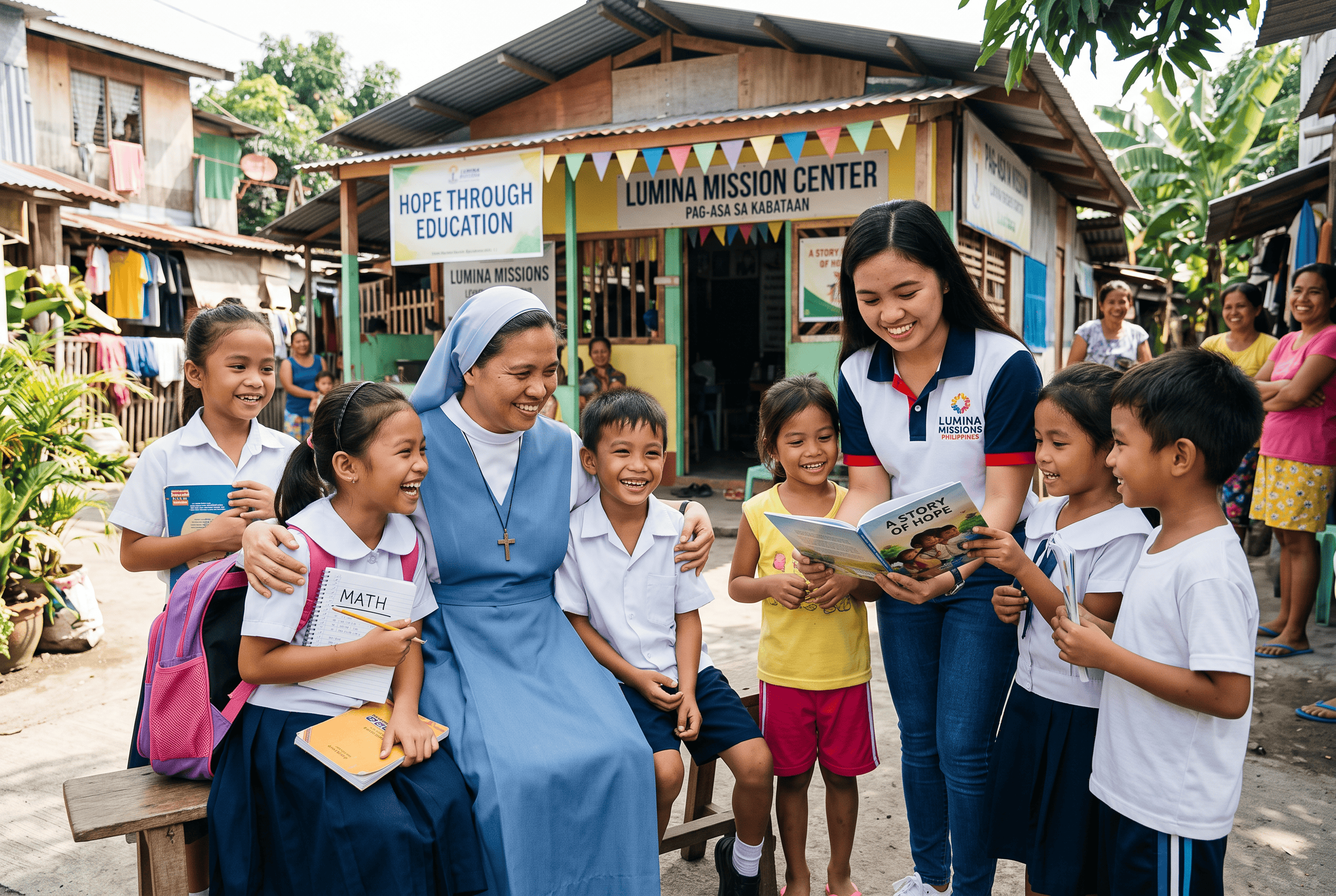
Poverty in the Philippines affects millions of children who grow up without reliable access to food, education, or medical care. Faith-based organizations have long played a significant role in addressing these gaps, often reaching communities that government services and larger international agencies simply don’t. Understanding how Christian missions help children in practical, measurable ways is important for anyone considering where to direct their support. The Vision Help International Care Foundation is one such organization, combining a Christian mission with over 15 years of hands-on experience in Manila’s most underserved communities—delivering programs that change lives from the ground up.
How Christian Missions Help Children in the Philippines: Faith Meets Practical Action
Christian mission organizations operating in the Philippines share a common foundation: the belief that caring for vulnerable people is an expression of faith, not just a charitable activity. That motivation shapes how these organizations work. Staff and volunteers tend to stay longer, invest more personally, and build deeper relationships with the communities they serve than is typical in more transactional aid models.
In practical terms, Christian charity in the Philippines takes many forms. It includes residential care for orphaned and abandoned children, feeding programs for malnourished toddlers, literacy classes for adults and teenagers in urban slums, medical outreaches in communities with no access to healthcare, and educational sponsorships that keep children in school through college. What connects all of these programs is a commitment to serving the whole person rather than addressing a single need in isolation.
The Philippines is a predominantly Christian country, which means faith-based organizations often have natural entry points into communities that secular NGOs may find harder to access. Local churches serve as trusted gathering points, community leaders are often connected to faith networks, and families tend to respond positively to organizations whose values align with their own.
What Makes a Christian Charity in the Philippines Effective?
Effectiveness comes down to consistency, accountability, and genuine community integration. A church-based charity that has been present in a neighborhood for years, whose staff are known by name, and whose programs respond to what families actually need tends to produce far better outcomes than short-term mission trips or one-off relief efforts.
Donations from a Christian Perspective: Why Giving Is Central to the Mission
For many donors who support faith-based organizations, the decision to give is rooted in personal conviction as well as compassion. What does the Bible say about giving? For many Christians, the answer to that question is a direct motivation to support organizations working with vulnerable children. Scripture consistently emphasizes care for the poor, protection of children, and the responsibility of those with resources to share them with those who have none.
That theological foundation gives donations from a Christian perspective a particular quality. Donors aren’t just fulfilling a charitable impulse—they are acting on a deeply held belief that every child has inherent worth and deserves protection, opportunity, and love. That conviction tends to produce more sustained giving, deeper engagement with the organizations people support, and a genuine interest in outcomes rather than just transactions.
Christian Child Sponsorship: A Personal Commitment With Real Impact
Christian child sponsorship programs connect individual donors directly to children in need, creating a relationship that goes beyond financial support. Sponsors receive updates about the children they support, can correspond with them, and follow their development over time. For many sponsors, this personal dimension is what makes the commitment meaningful and sustainable over years rather than months.
Child aid in the Philippines delivered through sponsorship programs covers a wide range of needs: school fees, uniforms, and supplies; nutritional support; healthcare access; and the broader costs of running the residential and community programs that keep children safe. When a sponsor commits to a child, they are funding not just that child’s immediate needs but the entire ecosystem of care around them.
Mission Projects for Children in the Philippines: What They Look Like on the Ground
Effective mission projects for children in the Philippines share several practical characteristics that distinguish them from less successful interventions:
- They are designed with input from the communities they serve, not imposed from outside
- They address multiple dimensions of poverty simultaneously rather than focusing on a single need
- They maintain a long-term presence rather than cycling through short deployments
- They measure outcomes and adjust programs based on what the evidence shows is working
- They build local capacity so that communities become increasingly self-sufficient over time
These principles apply equally to large international organizations and small, locally embedded nonprofits. The difference is often in execution. Smaller organizations with permanent community roots tend to apply these principles more consistently because they are accountable to the people they serve in a direct, daily way.
Community Work for Children in the Philippines: Beyond the Program
The most lasting impact of community work for children in the Philippines often shows up in ways that aren’t captured in program statistics. A teenager who grew up in a residential care center and goes on to college. A mother who completes a literacy program and finds stable employment. A child who was malnourished at age two and is thriving in school at age ten. These outcomes are the product of sustained, relationship-based work that combines help through compassion with practical resources and genuine accountability.
Development aid in the Philippines that is rooted in faith and delivered through trusted community organizations consistently demonstrates that transformation is possible, even in the most challenging circumstances. The key is not resources alone but the quality of human relationships that those resources are channeled through.
The Bigger Picture
Christian child aid in the Philippines operates within a complex landscape of need, but the organizations making the most difference are those that have chosen depth over breadth. They serve fewer communities, but they serve them well. They build relationships that last decades, not projects that run for a year or two and disappear.
The Vision Help International Care Foundation has taken exactly that approach since its founding. By staying rooted in specific communities, maintaining transparent programs, and treating every child as an individual worthy of real investment, VHICF demonstrates what help for children in the Philippines looks like when faith and practical action work together consistently over the long term.