

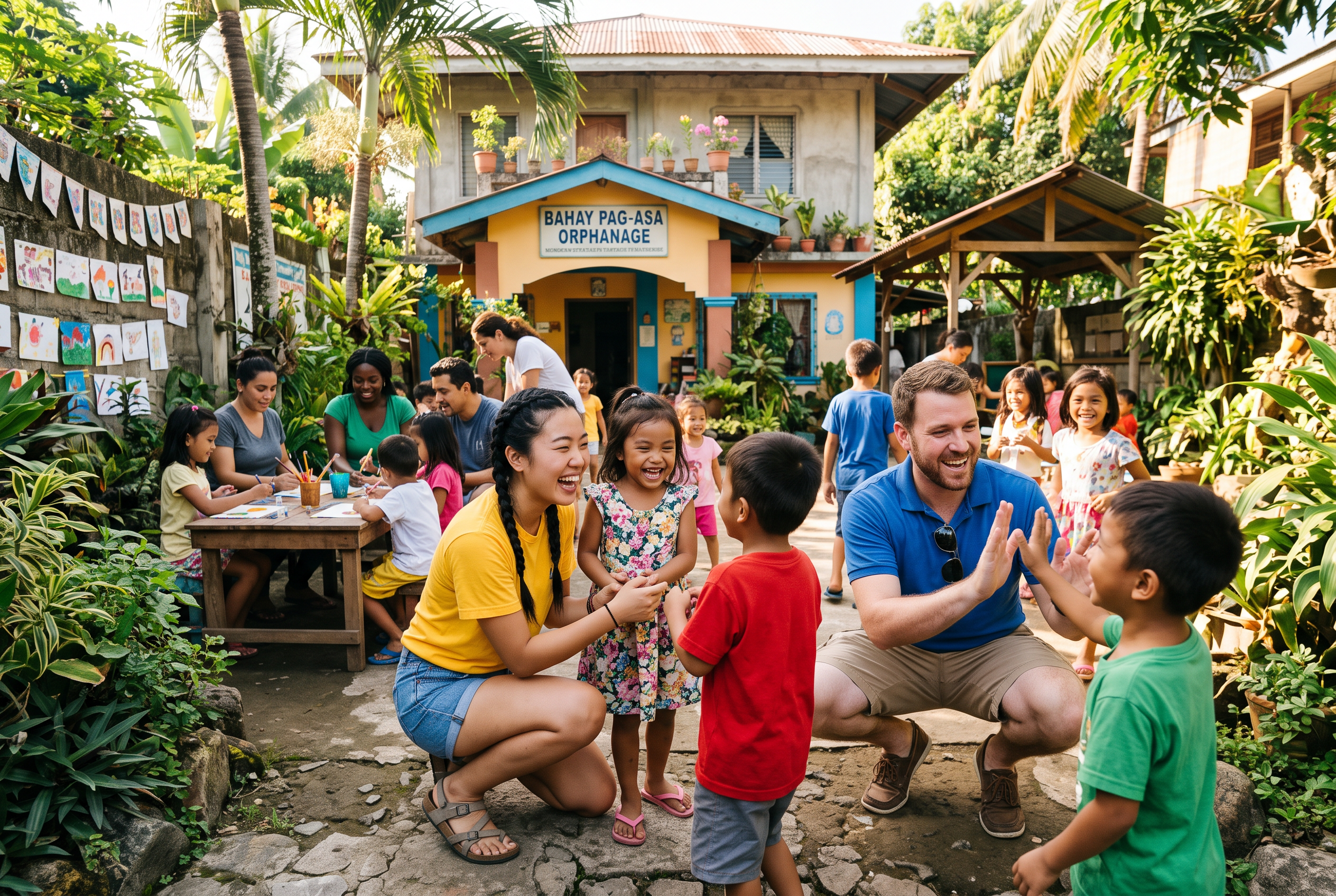
The desire to help vulnerable children is one of the most genuine impulses a person can act on. But volunteering at orphanages in the Philippines requires more preparation than many people realize. The children in these programs have often experienced trauma, abandonment, and instability, which means the quality and consistency of volunteer involvement matters enormously. Showing up unprepared or for too short a time can do more harm than good. The Vision Help International Care Foundation has been placing and supporting volunteers in its residential care centers for over 15 years, offering a structured, responsible framework that ensures volunteers genuinely contribute to the children they come to help.
Volunteering at Orphanages in the Philippines: What the Reality Looks Like
Residential care centers in the Philippines house children who have experienced some of the most difficult circumstances imaginable—abandonment, abuse, trafficking, and extreme poverty. These are not environments where enthusiasm alone is sufficient. Children in residential care form attachments quickly, and when volunteers leave after a short stay, that departure can feel like another abandonment to a child who has already experienced too many.
That doesn’t mean volunteering is harmful. It means it needs to be done thoughtfully. The most effective volunteer work in the Philippines is long-term, structured, and integrated into the daily rhythm of the programs it supports. Volunteers who commit to a minimum of three months, live on-site or nearby, and participate consistently in the children’s daily lives make a genuinely positive difference.
Volunteering for children in residential settings also requires a clean background check, personal references, and, in many cases, a police clearance from the volunteer’s home country. These requirements exist to protect the children, not to discourage genuine applicants.
What Does VHICF Look for in a Volunteer?
The Vision Help International Care Foundation requires volunteers to be at least 18 years old, able to commit a minimum of three months, and willing to raise a contribution of approximately €200 per month to cover board and lodging. A police clearance from the volunteer’s home country is mandatory. Beyond the paperwork, VHICF looks for people who are patient, adaptable, team-oriented, and genuinely motivated by the well-being of the children rather than by the personal experience of volunteering abroad. The foundation operates a residential center, the Village of Hope in Morong, where volunteers work alongside permanent staff in structured daily programs.
Volunteer Work in the Philippines: Choosing the Right Organization
Not all volunteer placements are created equal. The volunteer placement in the Philippines landscape includes everything from highly professional, government-accredited nonprofits to informal arrangements that offer little structure, oversight, or genuine benefit to the children involved. Before committing to any placement, it is worth doing serious research.
Questions to Ask Before You Commit
A responsible organization will welcome your questions and answer them clearly. Before accepting a volunteer service in the Philippines, consider asking the following:
- Is the organization registered with the Philippine Department of Social Welfare and Development (DSWD)?
- What is the minimum time commitment, and why?
- What background checks and clearances are required?
- What training or orientation will you receive before working directly with children?
- What supervision and support structures are in place during your placement?
- How does the organization ensure continuity of care for children when volunteers leave?
Organizations that struggle to answer these questions clearly are worth approaching with caution. Those that have well-developed answers demonstrate that child protection is genuinely central to how they operate.
The weltwärts Philippines Program and Structured Placements
For German-speaking volunteers specifically, the weltwärts Philippines program offers a government-backed pathway into structured volunteer placements with accredited organizations. VHICF is a certified weltwärts placement organization, accredited through the German Federal Ministry for Economic Cooperation and Development. This accreditation means the placement meets established standards for volunteer preparation, support, and child protection—offering an additional layer of assurance for volunteers and their families.
Volunteering Abroad in the Philippines: Practical Preparation
Volunteering abroad in the Philippines involves more than booking a flight and packing a bag. Practical preparation makes a significant difference to how smoothly a placement goes and how much a volunteer can actually contribute from day one.
Key steps to take before departure include:
- Obtaining a police clearance certificate from your home country well in advance, as processing times vary
- Researching the specific community and region where you will be based
- Learning basic Filipino or Tagalog phrases, which goes a long way in building trust with local staff and families
- Understanding the cultural context of poverty and child welfare in the Philippines
- Preparing mentally for the emotional weight of working with children who have experienced trauma
Help abroad in the Philippines is most effective when volunteers arrive informed, realistic, and ready to follow the lead of experienced local staff rather than assuming they know best.
Voluntary Social Year in the Philippines: A Longer Commitment With Deeper Impact
For young people considering a voluntary social year in the Philippines, the benefits go in both directions. The children in residential care gain a consistent, caring adult presence over an extended period. The volunteer gains a depth of cross-cultural experience, personal growth, and professional skills that shorter placements simply cannot provide.
A full year in a residential care setting means watching children develop, celebrating their milestones, supporting them through difficulties, and becoming a genuinely trusted figure in their lives. That kind of sustained relationship is valuable for children who have experienced loss and instability, and it is something that only time can build.
How to volunteer in the Philippines responsibly comes down to one core principle: put the children’s needs ahead of your own desire for a meaningful experience. When that principle guides every decision—how long to stay, how to behave, how to say goodbye—volunteering becomes what it should be: a genuine contribution to a child’s life rather than an item on a personal bucket list.
Going In With the Right Mindset
Volunteer aid projects in the Philippines that produce real change are built on humility, patience, and a willingness to learn. The Vision Help International Care Foundation has developed a volunteer program that reflects those values, offering proper screening, structured orientation, ongoing support, and a genuine community of staff and long-term volunteers that new arrivals can rely on. For people who are serious about making a difference in the lives of children in the Philippines, that kind of framework is exactly what responsible volunteering looks like.