

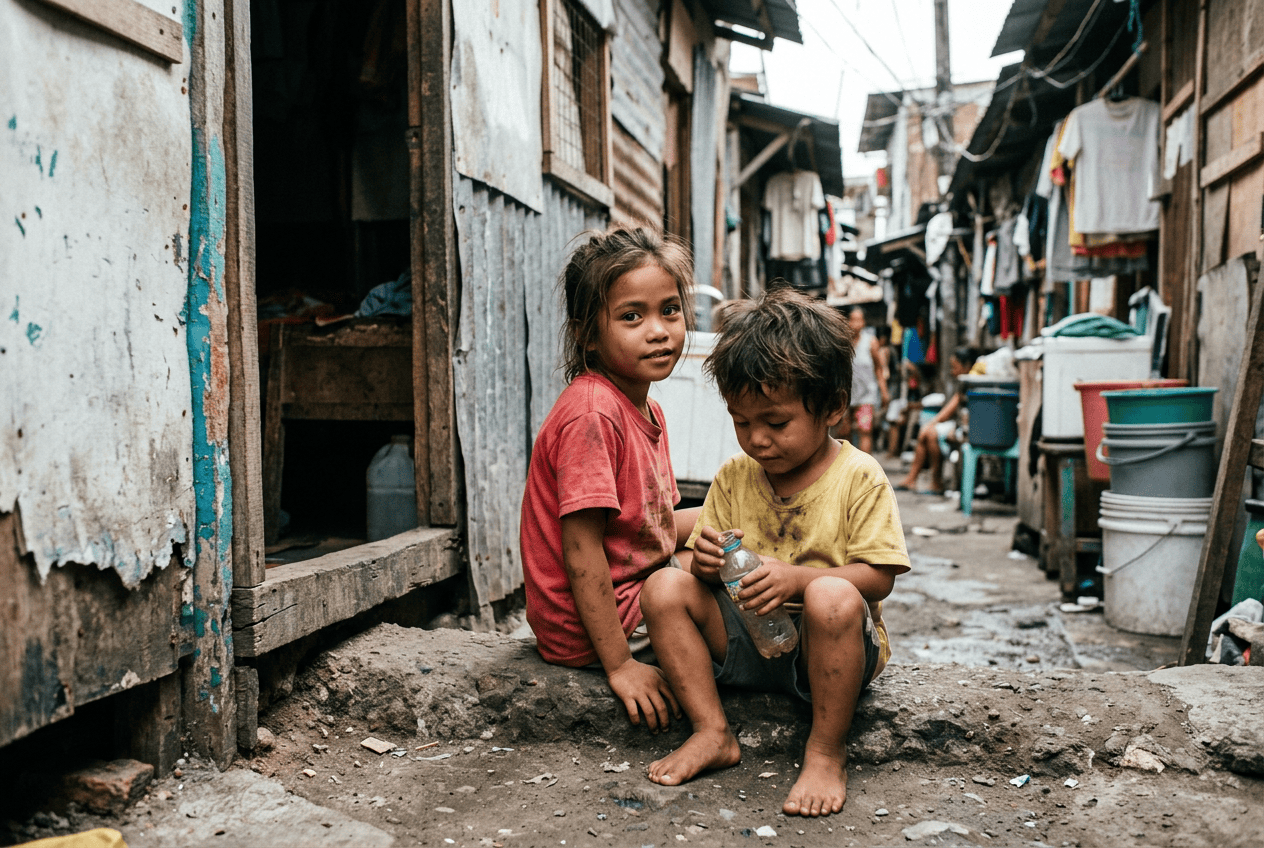
The child poverty rate in the Philippines remains alarmingly high, with approximately 5.14 million children living in extreme poverty despite years of economic growth. Multiple factors—from inadequate access to education and healthcare to natural disasters and systemic inequality—trap generations of Filipino children in cycles of deprivation. The Vision Help International Care Foundation works tirelessly to address these complex challenges through holistic programs that target the root causes and provide comprehensive support to vulnerable communities. Through residential child care centers, medical outreaches, scholarship grants, community trainings , and disaster relief operations, the organization creates pathways out of poverty for thousands of children across the Philippines.
The Staggering Scale of the Problem
The numbers tell a sobering story. According to the Philippine Statistics Authority, approximately 37.95 million individuals—or 33.62 percent of the projected total population—are children aged 0-17. Within this vulnerable group, around 5.14 million Filipino children live in extreme poverty. Research suggests official figures may underestimate the true extent of the crisis, with child poverty rates potentially reaching twice the reported levels when measured at the individual rather than household level.
Regional disparities are stark. The Bangsamoro Autonomous Region in Muslim Mindanao has the highest incidence of poverty at 37.2 percent, while rural areas consistently face deeper poverty than urban centers. Three-quarters of those living in poverty in the Philippines reside in severe disaster-risk areas that are highly rural, where farming and fishing families struggle against both economic hardship and environmental threats.
What Are the Main Drivers of Child Poverty?
Causes of child poverty in the Philippines include economic inequality, limited access to quality education and healthcare, widespread malnutrition, and frequent natural disasters that devastate vulnerable communities. The Vision Help International Care Foundation addresses these interconnected issues through residential child care, medical outreaches, community trainings, and disaster relief operations that provide immediate assistance while building long-term resilience.
Root Causes That Perpetuate the Cycle
Understanding why children are poor in the Philippines requires examining multiple interconnected factors at household, community, and systemic levels. Economic constraints combine with inadequate social infrastructure to create conditions where millions of families cannot meet their children’s basic needs.
Limited Employment and Income
At the household level, limited employment opportunities remain primary drivers. The majority of the working poor are informal or non-wage workers who lack minimum wage protection. In 2015, over 90 percent of low-paid workers were employed informally, making them ineligible for minimum wage policies. This means less than 2 percent of the working poor benefit from wage protections, highlighting their limited effectiveness in addressing poverty.
Education Barriers
Many children in poverty face educational disadvantages that compound over time. Filipino students lag five to six years behind students in countries with similar economic profiles. Key challenges include:
- Long distances to schools in rural areas, with some communities having no nearby classrooms
- Lack of basic supplies, books, and trained teachers
- High dropout rates driven by financial hardship
- Poor academic performance is linked directly to malnutrition
The 2022 Programme for International Student Assessment revealed that Philippine students ranked among the lowest of 79 countries in mathematics, science, and reading—a direct reflection of how poverty undermines educational outcomes.
The Devastating Impact of Malnutrition
One in three Filipino children is stunted, meaning they are short for their age due to chronic malnutrition. This affects approximately 5.14 million children and has far-reaching consequences beyond physical growth. Malnutrition kills 95 Filipino children every day, while 27 out of 1,000 children do not survive past their fifth birthday.
The economic burden of childhood undernutrition was estimated at $4.4 billion, or 1.5 percent of GDP, in 2015. Children in need of proper nutrition face impaired cognitive development, which adversely affects their schooling performance and future productivity. The country ranks fifth in the East Asia and Pacific region with the highest prevalence of stunting.
Several factors contribute to this crisis. Poverty remains the leading cause—42.4 percent of children from households in the poorest income quintile are stunted. Families struggling to survive cannot afford nutritious food. Maternal malnutrition compounds the problem, as approximately 14 percent of Filipino women of reproductive age are undernourished, creating an intergenerational transmission of nutritional deprivation that affects future generations.
Healthcare Access and Best Charity in the Philippines Response
Access to healthcare varies dramatically by location and economic status. Many private hospitals exist within Manila, yet they remain unreachable for countless poor families who cannot afford even the simplest medicine. The few government hospitals that might provide care are often ill-equipped and unable to address dire medical needs.
Poor health infrastructure means treatable illnesses frequently go untreated. Inadequate routine immunization coverage contributes to outbreaks of diseases like measles, pertussis, and polio. In 2024, the country experienced significant outbreaks of these preventable diseases, demonstrating how inadequate healthcare directly threatens child survival. Organizations providing medical aid for children in the Philippines work to bridge these gaps through free medical outreaches and surgical missions.
Natural Disasters Compound Vulnerability
The Philippines stands as one of the most climate disaster-prone countries in the world. Regular catastrophes create immediate crises that include:
- Destruction of homes, schools, and infrastructure
- Loss of crops and livelihoods for farming and fishing families
- Displacement of entire communities
- Diversion of resources from long-term development to emergency response
The frequency of climate-driven disasters makes it exceptionally difficult to overcome issues of poverty and malnutrition. When a typhoon destroys a family’s home and livelihood, recovery takes years. Before one community fully rebuilds, another disaster often strikes, perpetuating cycles of displacement and deprivation that require sustained emergency aid for children in the Philippines.
Breaking the Intergenerational Cycle
The persistence of child poverty in the Philippines creates a self-perpetuating cycle. Children who experience poverty and malnutrition start school later, perform poorly on cognitive tests, and drop out before completing their education. Without adequate education and skills development, these children grow into adults who remain trapped in poverty and struggle to provide for their own children.
Breaking this cycle requires comprehensive interventions addressing multiple dimensions simultaneously. Help for children in the Philippines must include immediate relief and long-term strategies that improve education access, healthcare infrastructure, nutritional support, disaster preparedness, and economic opportunities. The Vision Help International Care Foundation implements this holistic approach, providing residential child care for abandoned and orphaned children, conducting free medical outreaches, offering donate to the Philippines programs for disaster relief operations, and working with communities to build resilience against future challenges that threaten the welfare and development of vulnerable populations throughout the archipelago.