

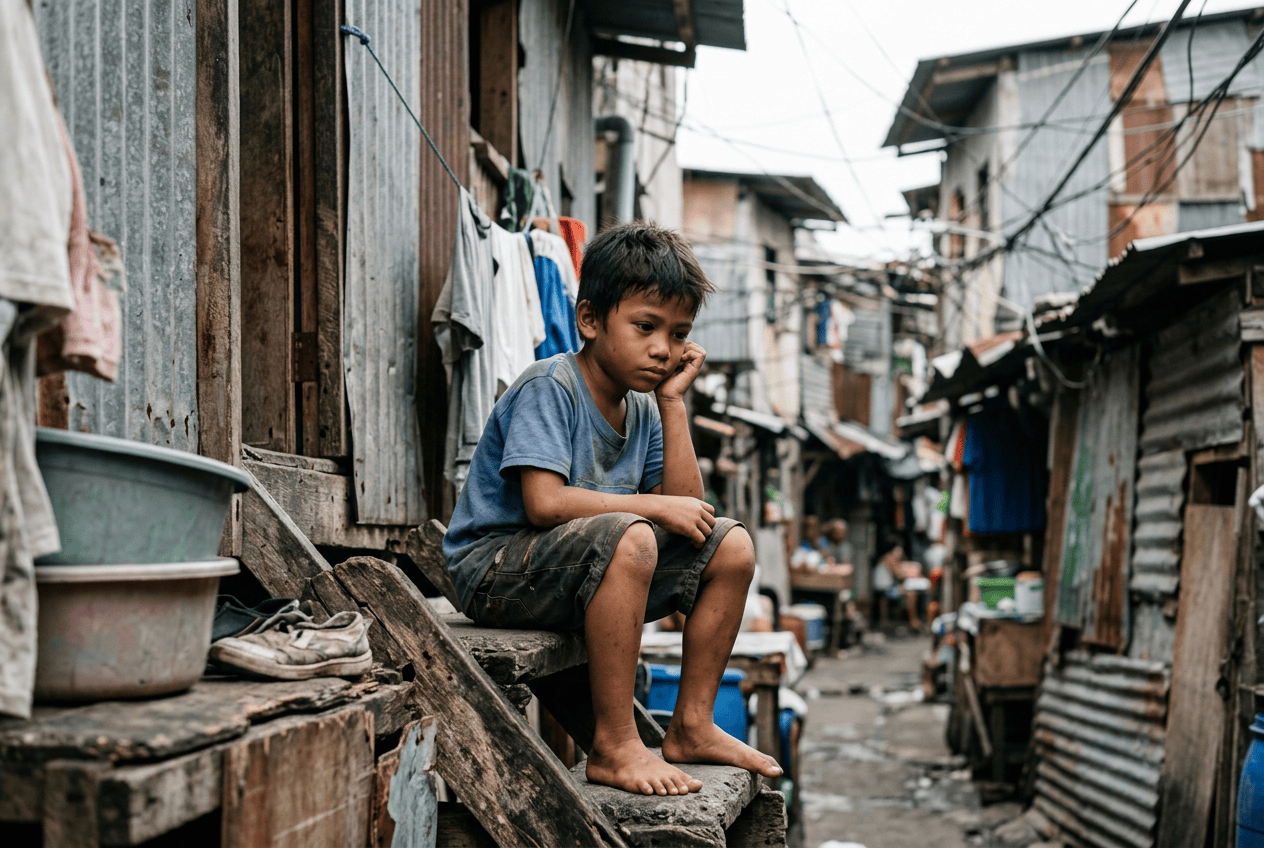
Child labor in the Philippines remains a persistent challenge despite recent progress, with approximately 509,000 children engaged in hazardous work as of 2024. Poverty, limited access to education, and inadequate family income force hundreds of thousands of children to work instead of attending school, perpetuating cycles of deprivation across generations. The Vision Help International Care Foundation works tirelessly to break these cycles through residential child care programs and educational support and community development initiatives that address the root causes driving families to rely on child labor. By providing holistic assistance to vulnerable children and their families, the organization creates pathways away from exploitation and toward brighter futures built on education and opportunity.
Understanding the Scale of the Problem
Recent data from the Philippine Statistics Authority shows encouraging trends alongside persistent challenges. The number of working children aged 5 to 17 dropped to 863,000 in 2024 from 1.09 million in 2023, representing the lowest figures in recent years. However, beneath these improvements lies a troubling reality—among these working children, 509,000, or 59.1 percent, are engaged in what legally constitutes child labor, meaning work that is hazardous, excessive, or inappropriate for their age.
The agricultural sector accounts for the largest share at 64.4 percent, followed by services at 29.0 percent and industry at 6.6 percent. Boys constitute 68.5 percent of child laborers, while children aged 15 to 17 represent 78.6 percent of those engaged in such work. These statistics reveal that despite government efforts, significant work remains to eliminate this practice entirely.
How Does Poverty Drive Children Into Work?
Financial constraints remain the primary factor forcing children into labor. Families living below poverty in the Philippines cannot afford basic necessities, compelling children to contribute to household income instead of pursuing education. The Vision Help International Care Foundation addresses this through comprehensive support programs that provide both immediate assistance and long-term solutions, helping families break free from economic pressures that push children into work.
Root Causes Behind Child Labor
Understanding why children are poor in the Philippines and forced to work requires examining multiple interconnected factors. These drivers operate at household, community, and systemic levels, each reinforcing the others in ways that trap vulnerable families.
Poverty as the Primary Driver
Poverty incidence among families with child laborers is approximately twice the national rate. Low household income remains the key driver, with many families earning barely enough to survive. Research indicates that financial constraints, inability to fulfill primary needs due to family size, and availability of child work are the three main reasons influencing household decisions to allow children to work.
Rural poverty accounts for about 75 percent of national poverty, largely because the agricultural population constitutes approximately 60 percent of the total population. Farming and fishing families struggle with irregular income, making children’s economic contributions seem necessary for survival.
Educational Barriers
Lack of access to quality education creates both a cause and a consequence of child labor. Although the Constitution establishes free, compulsory education through age 18, unofficial school-related fees for uniforms, supplies, and transportation remain prohibitive for many families. In rural areas, substandard infrastructure makes traveling to school difficult or impossible.
Research shows that 60 percent of child laborers did not reach sixth grade. Insufficient income to sustain schooling constitutes 19.2 percent of out-of-school youth, while another 19.1 percent cite lack of interest—often a symptom of families prioritizing immediate survival over long-term educational investment.
Geographic and Sectoral Vulnerabilities
Certain regions and industries present higher risks. Northern Mindanao records the highest proportion, with three in every ten children aged 5 to 17 already working. Children in poverty living in rural agricultural areas face particular vulnerability, working in family farms and plantations where monitoring and enforcement of labor laws prove difficult.
The worst forms involve hazardous conditions in mining, deep-sea fishing, and sugarcane production. Children work as fruiters, harvesters, haulers, and loaders in banana plantations, sustaining injuries from weeding, harvesting, and bagging work.
The Devastating Consequences
Child labor prevents physical, intellectual, and emotional development. Children in need laboring under hazardous conditions face great risk of injury or contracting various diseases. More than 20,000 children die yearly worldwide due to work-related accidents, and many more suffer lasting health consequences.
The educational impact creates intergenerational poverty. Children forced to work sacrifice schooling, leaving them without technical skills needed for stable employment as adults. Unable to finish basic education, they remain trapped in the same low-income, labor-intensive jobs that forced them to work as children. Their own children then face identical circumstances, perpetuating cycles across generations.
Studies demonstrate that malnourished children who also work are 79 percent less likely to score high academically compared to their well-fed, non-working peers. This learning poverty translates directly into reduced earning potential throughout adulthood, ensuring poverty persists.
Addressing the Crisis Through Charity in the Philippines
Breaking the cycle requires multifaceted approaches that address immediate needs while building long-term resilience. The Philippine government has committed to achieving zero child labor by 2028 through the Child Labor Prevention and Elimination Program, which employs multi-layered strategies including livelihood assistance for families, educational support for children, and strengthened enforcement of labor laws.
Key interventions include:
- Providing financial assistance and livelihood programs to families, reducing economic pressure to send children to work
- Expanding access to quality, truly free education by eliminating unofficial fees and improving school infrastructure
- Strengthening monitoring and enforcement in high-risk sectors like agriculture, mining, and domestic work
- Offering rehabilitation services for children removed from labor, including educational catch-up programs
Organizations working on help for children in the Philippines recognize that effective solutions must engage families, local governments, and entire communities. When parents receive livelihood assistance and skills training that enable them to earn decent wages, children can return to school. Programs providing donations for children help bridge the gap between poverty and educational access, ensuring families don’t need to choose between survival and their children’s future.
Christian charity organizations and secular NGOs alike work alongside government agencies to create comprehensive support systems. These partnerships recognize that eliminating child labor requires addressing its root causes—poverty, lack of educational access, and inadequate social protection for vulnerable families.
Looking Forward
Recent data reveals how widespread child labor in the Philippines remains, though numbers are declining annually—approximately 509,000 children are still engaged in work that threatens their well-being and future. Each child laborer represents not just a current tragedy but a missed opportunity for the nation’s development. When organizations provide help for children through holistic programs, they create environments where every child can experience education, protection, and the chance to develop their full potential.
The Vision Help International Care Foundation continues working alongside government agencies and communities to break cycles of child labor and poverty. Through residential care for abandoned children, educational support programs, and community development initiatives, the organization demonstrates that sustainable change is possible when interventions address both immediate needs and systemic causes driving families to rely on child labor.